-
 Piaff Dibota
- Blog
- Updated on March 23, 2026
35+ Impressive AI Content Statistics You Didn’t Know
AI content statistics are everywhere right now, but if you look closely, they don’t always tell the same story. Some numbers say people love AI content. Others suggest they barely trust it.
That tension is interesting. And honestly, a bit uncomfortable if you create content for a living.
In this article, you’ll go through the most important AI content stats, not just to see what’s happening, but to understand what people actually feel about it.
Key AI Content Statistics
- 88% of marketers use AI in their day-to-day roles, and 93% of them use it to generate content faster.
- Ahrefs analyzed 900,000 newly created web pages in April 2025 and found that 74.2% contained AI-generated content.
- 25.6% of marketers say AI-generated content is more successful than content created without AI.
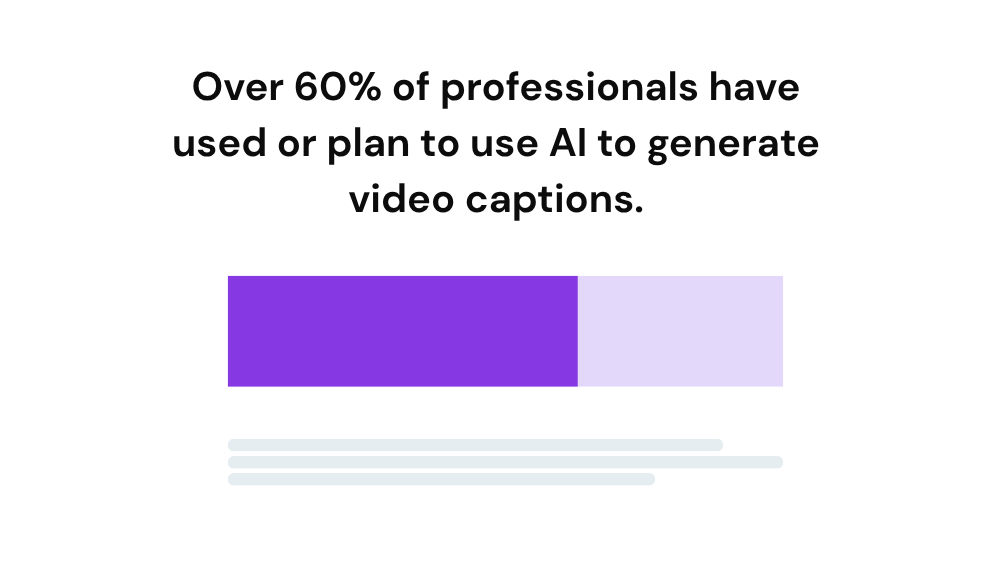
- Over 60% of professionals have used or plan to use AI to generate video captions.
- Almost 90% of consumers globally want to know whether an image has been created using AI.
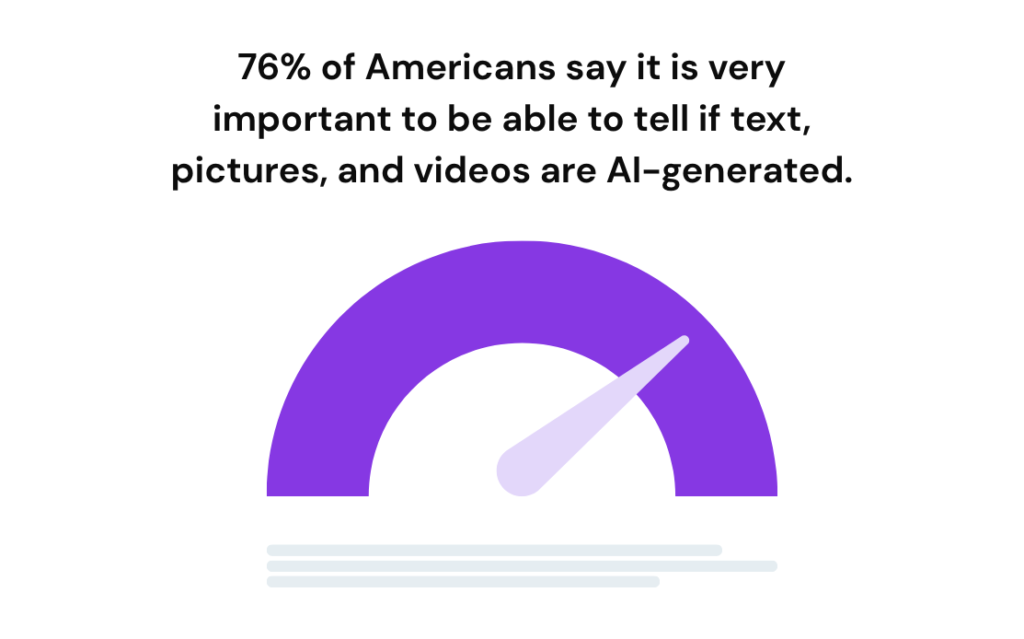
- 76% of Americans say it is extremely or very important to be able to tell if text, pictures, and videos are AI-generated.
Table of Contents
AI Writing and Content Marketing
This is where most people start when they think about AI content. Writing. Blogs, emails, landing pages.
You’ll notice a lot of these AI content stats lean heavily into adoption and speed. Which makes sense.
1. 88% of marketers use AI in their day-to-day roles, and 93% of them use it to generate content faster. [SurveyMonkey]
2. 67% of small businesses already use AI for content and SEO. [Semrush]
3. 68% of businesses report increased content marketing ROI after using AI. [Semrush]
4. 65% of companies say AI helps them achieve better SEO results.
5. Ahrefs analyzed 900,000 newly created web pages in April 2025 and found that 74.2% contained AI-generated content. And 86.5% of top-ranking pages contain at least some AI-generated content. [Ahrefs]
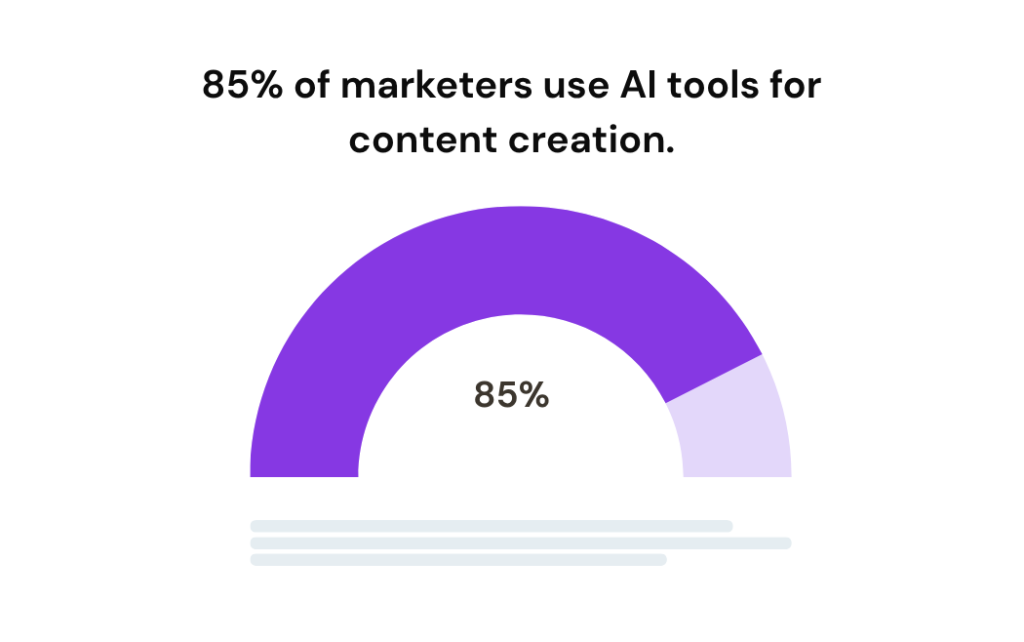
6. 85% of marketers use AI tools for content creation. [CoSchedule]
7. 25.6% of marketers say AI-generated content is more successful than content created without AI. [CoSchedule]
8. 64% of marketers say AI-generated content performs as well as or better than manually created content. [CoSchedule]
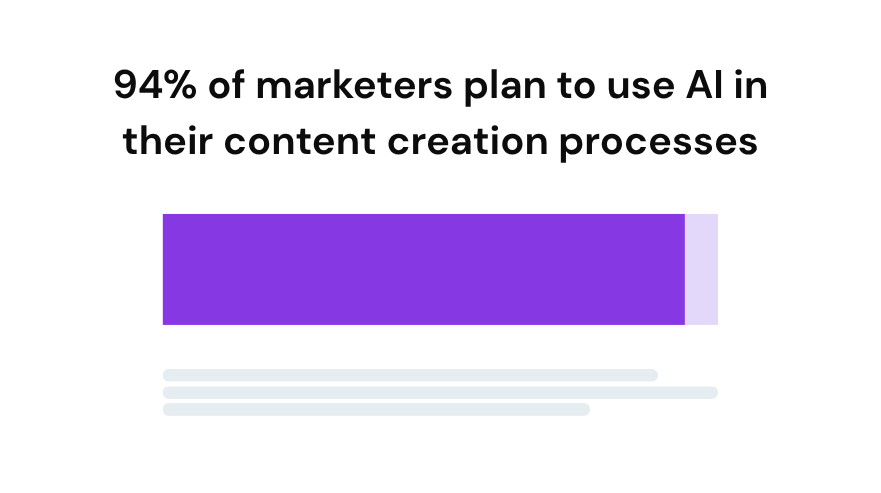
9. 94% of marketers plan to use AI in their content creation processes, including blog content, in 2026. [HubSpot]
10. 75% of marketers currently use AI for media production.
11. 62% of people globally say they want ad content on social platforms to be created by humans rather than AI. [Ipso]
You may also like: 85+ interactive content statistics to know
AI Video Content
These AI content stats show how many teams are already using AI to create or edit videos. And it makes sense, video used to be slow and expensive. Now it’s not.
But then again, when something becomes easy that quickly, quality sometimes… drops without people noticing.
12. The share of professionals using AI to create videos rose from 18% to 41% in one year. Another 19% of professionals say they will start using AI to create videos soon. [Wistia]
13. Only 15% of AI video users say their main use case is post-production distribution tasks like captions and metadata.
14. Over 60% of professionals have used or plan to use AI to generate video captions. [Wistia]
15. More than 30% of professionals have used or plan to use AI to translate video dialogue into multiple languages.
16. 44% of marketers use video or animation generators, and 42% of marketers use AI video or audio editing tools. [HubSpot]
17. 69% of teams already use AI to support video creation, and 24% of marketers generate videos with AI more than twice a month. [VEED]
You may also like: 60+ hand-picked SaaS content marketing statistics
AI-Generated Images and Visuals
Images are a bit different. The technology feels impressive, almost too good sometimes. But this is also where trust issues really show up.
People struggle to tell what’s real anymore. These AI content statistics don’t just show adoption, they show confusion. And maybe even a bit of discomfort.
18. Almost 90% of consumers globally want to know whether an image has been created using AI. [Getty Images]
19. 98% of consumers agree that authentic images and videos are pivotal in establishing trust.
20. 76% of people agree that it is getting to the point where they cannot tell if an image is real. [Getty Images]
21. 45% of marketers use smart or AI image editing tools and features. [HubSpot]
You may also like: 49+ surprising SaaS statistics
AI News Content
22. In Reuters Institute’s 2025 survey, only 12% were comfortable with news made entirely by AI, compared with 21% when a human was in the loop, 43% when a human led with some AI help, and 62% for entirely human-made news. [Reuters Institute]
23. Around one-third of respondents, 32%, think human editors check AI outputs before publication to make sure they are accurate or high quality.
24. Across countries in Reuters Institute’s 2025 work, people expect AI to make news cheaper to produce and more up to date, but less transparent and less trustworthy.
Public Attitudes Toward AI-Generated Content
This is where the tone shifts completely. Companies are moving fast with AI, but people are not blindly following.
These AI content statistics show a mix of curiosity and hesitation.
People want transparency, they want labels, they want to know what they’re looking at. And if they don’t get that, trust drops quickly.
25. 54% of Americans say AI programs that generate text and images should credit the sources they rely on. [Pew Research Center]
26. 76% of Americans say it is extremely or very important to be able to tell if text, pictures, and videos are AI-generated. [Pew Research Center]
27. Only 12% of Americans say they are extremely or very confident they can tell whether text, pictures, and videos are AI-generated.
28. 73% of UK consumers say they are worried about AI-generated online content, and 67% of UK consumers say AI-generated content strongly contributes to the spread of misinformation. [YouGov]
29. 50% of UK consumers think labels on AI-generated online content would help reduce misinformation. [YouGov]
30. 87% of consumers say the rise of generative AI has made it harder to tell fact from fiction online. [Adobe]
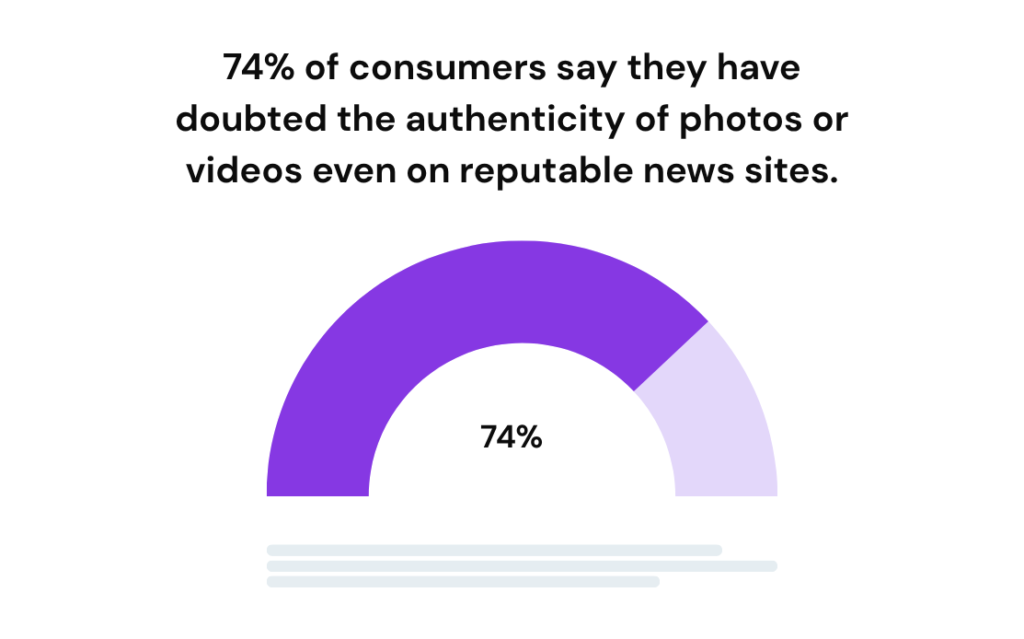
31. 74% of consumers say they have doubted the authenticity of photos or videos even on reputable news sites. [Adobe]
32. 94% of consumers said they were concerned that misinformation would affect the 2024 U.S. presidential election. [Adobe]
33. 27% of UK consumers say they would block or unfollow an account posting AI-generated content. [YouGov]
34. Across markets, 32% of consumers say their opinion of generative AI is more positive than it was a year earlier.
You may also like: 55+ impressive demand generation stats
How Marketers Rate AI Content Quality
35. 54% of Americans say AI programs that generate text and images should credit the sources they rely on. [Pew Research Center]
36. 76% of Americans say it is extremely or very important to be able to tell if text, pictures, and videos are AI-generated. [Pew Research Center]
37. Only 12% of Americans say they are extremely or very confident they can tell whether text, pictures, and videos are AI-generated.
Key AI Content Statistics for Important Decisions
After going through all these AI content statistics, one thing stands out. Adoption is moving fast, maybe faster than people’s comfort with it.
You’ll notice a gap between usage and trust, and that gap matters more than most marketers think.
These AI content stats are not just numbers to quote. They hint at how careful you need to be with how you create, present, and even label your content going forward.