How we helped nRev AI get 57× more traffic, 43× more signups, and 25,000 more AI citations
57x more
Qualified Organic Traffic
43x more
Signups influenced by Google and AI search
25,000+
Measured AI Citations
Challenge
As more buyers use AI tools to research software and compare solutions, nRev needed to appear when prospects asked ChatGPT, Copilot, Claude, and other AI engines about the best tools in its category.
Solution
We built an SEO and AEO content strategy around high-intent searches, competitive research, and bottom-of-the-funnel content designed to put nRev in front of buyers already evaluating solutions.
Results

- Monthly sessions grew from 101 to 5,726, approximately 57× growth
- Monthly signups grew from 3 to 128, approximately 43× growth
- nRev accumulated 25,000+ AI citations
- 94.2% of these AI citations were non-branded, meaning nRev was being surfaced for category searches rather than only searches for its own name
“Easy onboarding and content started ranking on Google and getting picked up by AI faster than we expected.”
Introduction
nRev AI is an autonomous GTM AI engineer built for RevOps teams and GTM leaders.
Its platform helps revenue teams build and run GTM workflows across areas such as prospecting, signals, CRM operations, enrichment, outbound, and other parts of the revenue process.
That also puts nRev in an unusually competitive search category.
A potential customer researching a solution might search for revenue operations software today, AI sales agents tomorrow, and GTM automation tools the following week. nRev needs to be visible throughout that buying journey.
When we started working together, the company was still building that organic acquisition engine.
As Jay put it:
“We were just getting started when Piaff reached out, lucky us. They helped us turn web content into an acquisition channel.”
That became the goal of our work together: turn content into a reliable way for potential buyers to discover nRev, whether their research started with Google or an AI assistant.
The challenge: standing out in an extremely competitive GTM category
Ranking SaaS content is rarely easy.
Doing it in sales, revenue operations, GTM, and AI automation makes the problem considerably harder.
nRev is competing for attention in categories filled with established software companies, new AI products, comparison sites, review platforms, and publishers producing content around the exact same topics.
And many of the searches that matter most are commercially valuable.
Someone searching for:
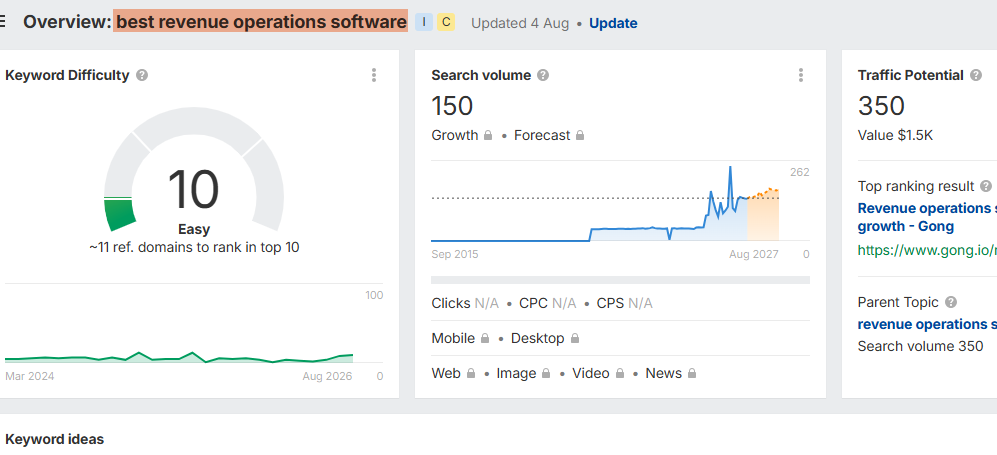
- best revenue operations software
- best sales prospecting tools
- best sales enablement tools
- best go-to-market tools
- best AI sales agents
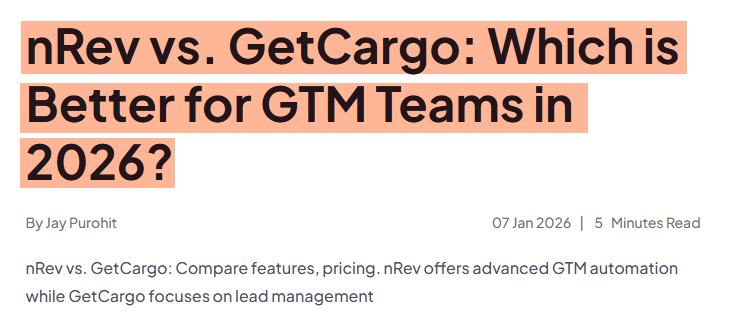
- product comparisons
isn’t casually browsing.
They’re researching options.
They may already have a problem, understand the type of software they need, and be moving closer to evaluating a product.
Those are exactly the people nRev wanted to reach.
There was also a second battle for visibility.
AI assistants increasingly give buyers direct answers to software questions. A prospect can ask for the best tools for a particular GTM problem and receive a shortlist of companies without beginning their research on a traditional Google results page.
So nRev needed content capable of doing both jobs:
rank competitively on Google and give AI engines strong reasons to cite nRev in relevant answers.
The solution: a content partner that actually understood GTM
Getting the keywords right was only one part of the job.
GTM content can become generic very quickly when the person writing it doesn’t properly understand the market.
Jay didn’t want to spend his time explaining every angle, correcting basic assumptions, or rewriting articles after delivery.
That became one of the biggest strengths of the partnership.
“The team delivers with minimal hand-holding. You give them a direction and they come back with better angles than you’d have briefed, because they actually understand GTM.”
Instead of treating each assignment as an isolated article, we looked at what nRev sells, who buys it, how those buyers describe their problems, what competing companies already rank for, and where nRev had an opportunity to enter the conversation.
That allowed us to find topics with a much closer connection to the buying journey.
Jay described the process well:
“They helped us pin down the right keywords, ran competitive research to find where we could win, and produced long-form BoFu content that gets found by in-market buyers.”
How we approached nRev's SEO, AEO, and content strategy
#1. Understanding the GTM buyer
Before choosing topics, we needed to understand who nRev wanted its content to reach.
The audience includes RevOps professionals, GTM leaders, sales teams, growth teams, and other operators trying to make their revenue systems work more efficiently.
These aren’t readers looking for generic explanations of what sales or marketing means.
They have specific operational problems.
They are comparing tools, evaluating workflows, trying to automate repetitive processes, improving their data, researching prospecting solutions, and looking for better ways to run GTM.
That influenced which searches we prioritized and how we wrote about them.
The closer a topic was to a real buying decision, the more interesting it became.
#2. Finding competitive gaps nRev could realistically win
The next step was competitive research.
We looked beyond search volume and asked more useful questions:
- Which queries are potential nRev buyers actually using
- Which topics indicate that someone is evaluating software?
- Who already owns those search results?
- Where is the existing content weak?
- And where can nRev bring something more useful to the conversation?
This led us toward high-intent category, comparison, and solution-oriented searches rather than filling the blog with broad informational articles simply because they had traffic potential.
The goal was qualified discovery.
#3. Creating bottom-of-the-funnel content for people ready to evaluate
Once we had the right opportunities, we created content around searches much closer to the buying decision.
That included categories such as revenue operations software, sales prospecting tools, sales enablement tools, GTM tools, AI sales agents, and direct software comparisons.
These pages serve a very different purpose from a generic educational blog post.
The reader already knows a solution exists.
Now they want to know which one to choose.
So each piece needed to genuinely help them compare their options while giving nRev a natural place in that evaluation.
Jay called it:
“An exceptional 0 to 1 content engine: the right target keywords, competitive research, and bottom-of-the-funnel articles that bring in buyers who are ready to evaluate.”
#4. Building for Google and AI search at the same time
Traditional SEO remained important, but nRev’s opportunity went beyond rankings.
We also wanted the content to be easy for AI systems to understand, extract information from, and cite when answering relevant category questions.
That meant creating clear, information-rich pages around the entities, products, use cases, comparisons, and questions that matter in nRev’s market.
The impact became visible in the data.
One page about the best go-to-market tools alone accumulated 2,986 AI citations.
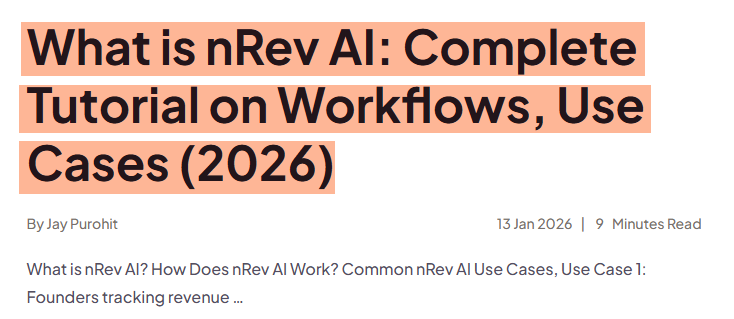
nRev’s product tutorial generated another 717 AI citations while reaching an average Google position of 5.1.
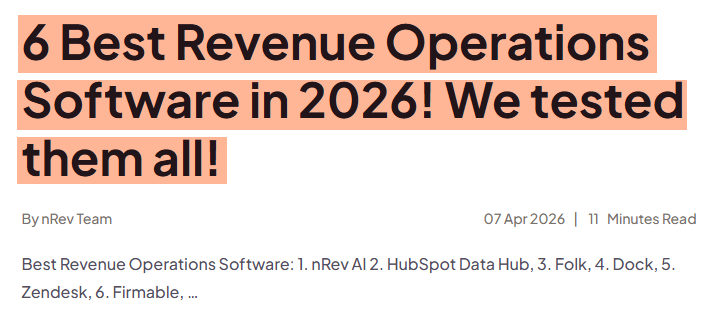
The best revenue operations software page reached an average position of 7.7, while nRev’s AI sales agents content reached 8.7.
Some pages were proving something especially interesting: a piece of content could create substantial visibility in AI answers even when its traditional Google ranking wasn’t yet at the very top.
Google rankings and AI citations had become two separate ways for nRev to get discovered.
The results
The wider growth of nRev’s organic acquisition engine was substantial.
Monthly website sessions grew from just 101 to 5,726. That’s approximately 57× growth.
More importantly, the increase wasn’t limited to website visits.
- Monthly signups grew from 3 to 128.
- That’s approximately 43× growth in signups.
The growth came through an overwhelmingly organic and earned acquisition engine, without paid media driving the numbers.
But one of the most interesting results was happening outside the traditional search experience.
nRev became increasingly visible inside AI answers
- nRev accumulated 25,489 measured citations across Bing/Copilot AI results.
- And 94.2% were non-branded citations.
That’s an important distinction.
It means nRev wasn’t simply appearing when someone already knew the company and searched for “nRev.”
The company was being surfaced around broader category topics where potential customers were looking for solutions.
The channel eventually reached 7,617 measured AI citations in a single month.
Jay saw the same shift from the marketing side:
“The same content gets cited by AI engines like ChatGPT, Copilot, Claude and more for non-branded category searches.”
For a growing SaaS brand, that’s a very different kind of visibility.
You don’t have to wait until someone knows your company exists.
Your brand can enter the conversation while that buyer is still asking which tools they should consider.
What Jay said about working with Rank Lyx
There is always a delay between publishing SEO content and seeing everything it can eventually produce.
Jay understood that.
“SEO and AEO compound over time, so the first few weeks take some patience before rankings and citations really show up.”
But his conclusion about the work itself was pretty clear:
“If anything, I’d happily take an even higher publishing velocity because the output has been strong.”
That combination matters.
The content needed minimal hand-holding, targeted commercially useful topics, started earning Google rankings, and became visible inside AI answers.
And ultimately, it helped nRev move closer to the thing they actually needed:
a content engine that contributes to acquisition.
Conclusion
nRev entered a difficult category to win organically.
The buyers are valuable. The keywords are competitive. The companies fighting for those buyers include both established SaaS brands and a constant stream of new AI products.
And now those companies are competing across two major discovery channels: traditional search and AI answers.
We worked with nRev to find the right search opportunities, understand where they could realistically compete, and create bottom-of-the-funnel content around problems and categories their potential customers were already researching.
During that growth, nRev’s monthly sessions moved from 101 to 5,726, while monthly signups grew from 3 to 128.
And Rank Lyx-produced content contributed thousands of tracked AI citations of its own while securing page-one Google positions for commercially relevant searches.
Jay summed up the transformation much more simply:
That’s exactly what we wanted the content to do.
Company name:
nRev
Industry:
SaaS/GTM and RevOps automation
Company size:
11-50 employees
Pain points:
Competing in a crowded sales, GTM, RevOps, and AI software category
Building organic visibility for high-intent searches
Getting discovered by in-market buyers
Increasing visibility inside AI-generated answers
Turning content into a measurable acquisition channel
Rank Lyx Services Used: