-
 Piaff Dibota
- Blog
- Updated on March 13, 2026
How to Use SEO to Increase ARR and MRR for SaaS
Many SaaS companies invest heavily in SEO, yet ARR barely moves. Traffic increases, rankings improve, dashboards look impressive. Still, revenue stays flat.
The problem usually is focus. When SEO targets visitors instead of buyers, growth stalls.
In this guide, you’ll learn how to use SEO to increase ARR and ARR by prioritizing high-intent keywords, building conversion-driven pages, and measuring revenue metrics.
Key Takeways:
- Here is how to use SEO to increase MRR and ARR:
- #1. Target Bottom-of-Funnel Keywords
- #2. Target Commercial Investigation Keywords
- #3. Improve and Maintain Your Technical SEO
- #4. Measure SEO and Revenue Metrics
- Ranking for broad informational queries attracts researchers, students, or people who simply want a quick answer.
- You can also work with a top SEO agency like Rank Lyx if you want to use SEO to increase MRR and ARR.
Why Traditional SEO Doesn’t Grow MRR
Most SaaS marketing teams fall into the traffic-first trap. You publish more blog posts, impressions go up, maybe even rankings improve. It feels like you are growing, but your MRR barely moves.
The issue usually hides in keyword intent.
You rank for broad informational queries that attract researchers, students, or people who simply want a quick answer. They read and leave, without starting a trial or booking a demo
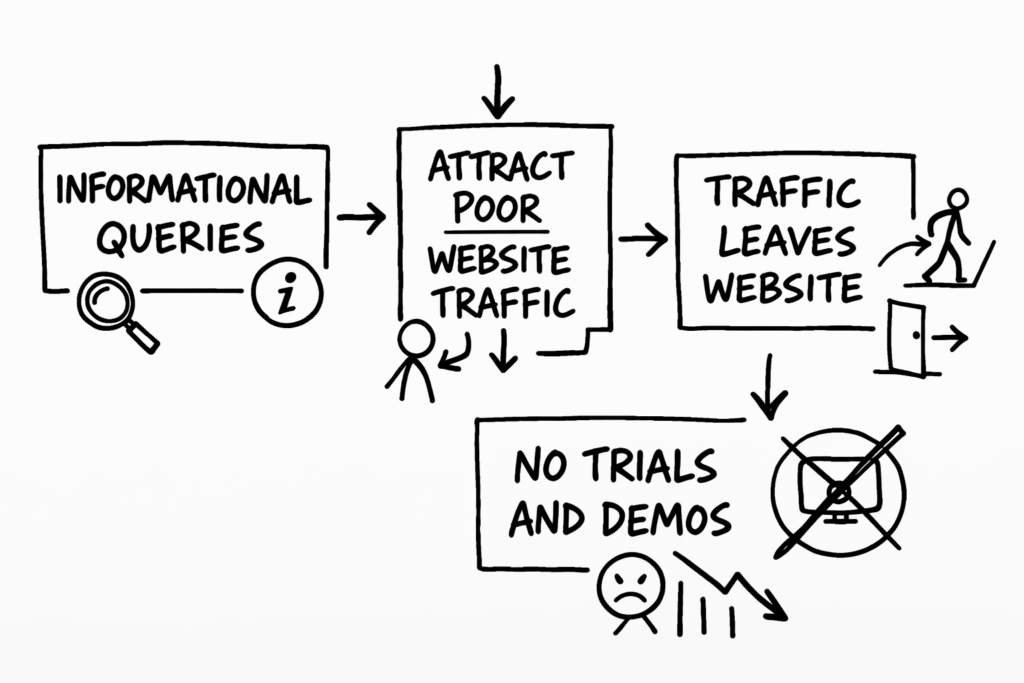
Then there’s structure. Blog posts often sit in isolation, with weak internal links to pricing, use cases, or comparison pages. So even high traffic never touches revenue pages.
And reporting makes it worse. Marketing celebrates sessions and clicks. Finance looks at ARR and churn. Those dashboards rarely speak the same language.
The Revenue-First SEO Mindset
1. Map SEO to the SaaS Growth Model
If you want SEO to increase ARR, you have to speak the language of revenue.
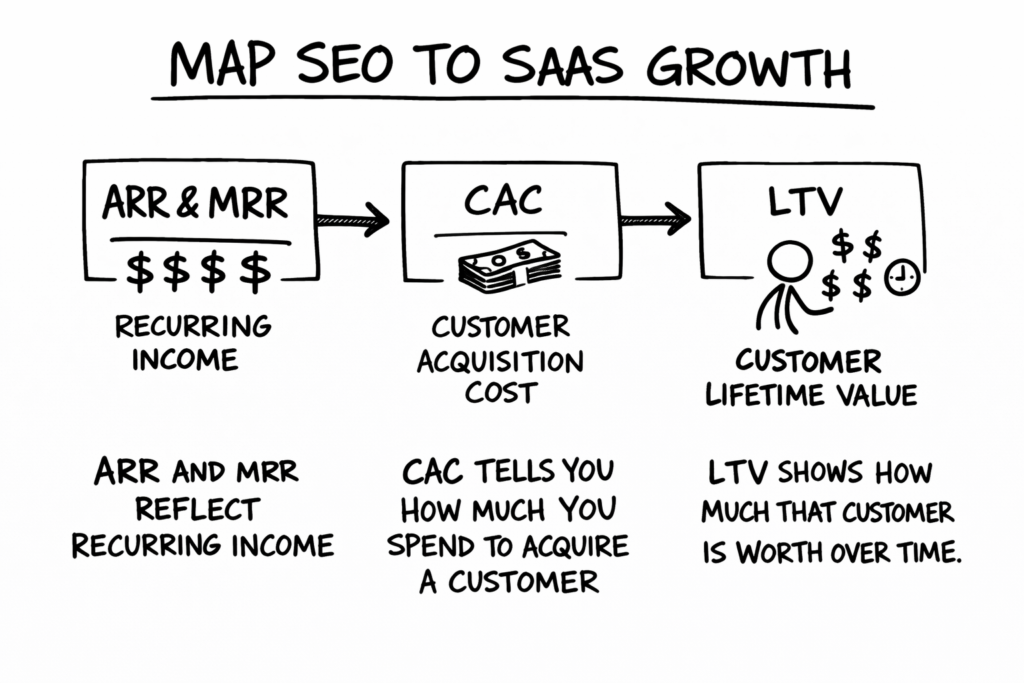
- ARR and MRR reflect recurring income.
- CAC tells you how much you spend to acquire a customer.
- LTV shows how much that customer is worth over time.
SEO influences all four, but not in the way most teams think.
Organic search lowers blended CAC because you don’t pay per click. It increases LTV indirectly by attracting high-intent buyers who fit your ICP better.
And when done right, it feeds MRR consistently instead of in spikes.
Unlike paid ads, organic acquisition builds momentum over time. Rankings strengthen, authority grows, and each page keeps generating demand long after it’s published.
2. Align SEO With Revenue Goals
Start with the ARR target, not the keyword list. If you want an additional $1M in ARR, break that into required MRR.
Then calculate how many new customers you need. From there, use your trial-to-paid or demo-to-close rate to estimate how many signups SEO must generate.
Assume your SaaS generates an average of $1,000 per month per account (based on the minimum number of seats you allow). You want to add $1M in ARR. That equals about $83,333 in new MRR.
At $1,000 per account, you now need roughly 83 new paying accounts. If your trial-to-paid rate is 25%, you’ll need about 332 trials to close those 83 accounts.
Now assume 2% of organic visitors start a trial. You would need around 16,600 qualified organic visitors to hit the goal.
See how the pressure shifts? Traffic still matters. But conversion rates and revenue per account matter more.
How to Use SEO to Increase ARR and MRR for SaaS
#1. Target Bottom-of-Funnel Keywords
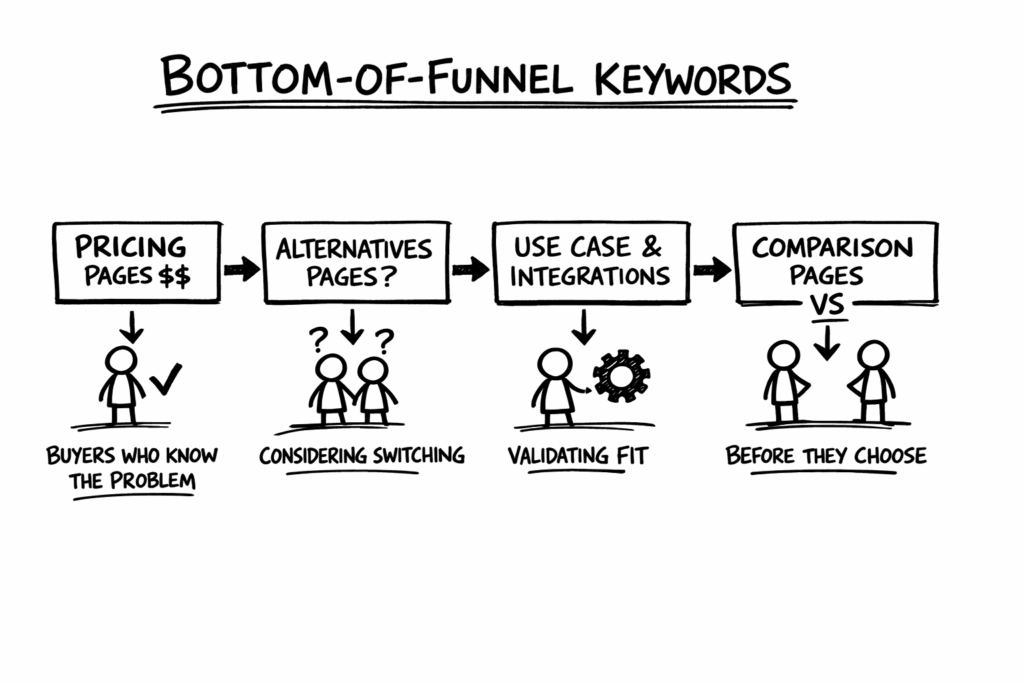
Bottom-of-funnel keywords sit closest to money. When someone searches “pricing,” “alternatives,” or “[your tool] vs competitor,” they are not browsing. They are evaluating. That intent alone changes everything.
- Pricing pages attract buyers who already understand the problem.
- Alternatives pages capture people actively considering switching.
- Comparison pages intercept prospects before they choose someone else.
- Use case and integration pages attract companies trying to validate fit inside their workflow.
These queries usually have lower search volume. That scares teams away. But one visitor from a pricing keyword can be worth more than 500 visitors from a broad educational post.
Revenue concentration beats traffic volume.
#2. Target Commercial Investigation Keywords
Commercial investigation keywords sit slightly higher in the funnel but still signal buying intent. Searches like “best project management software” or “CRM for law firms” often mean the searcher is making a shortlist.
These users want options, proof, and reassurance. If your page ranks here and actually helps them compare logically, you influence vendor selection early.
The trick is not to write generic listicles. You need positioning. Why your product fits a specific segment. Why it might not fit others.
Done right, these pages generate steady demo flow because they attract companies already allocating budget, not people casually researching trends.
#3. Improve and Maintain Your Technical SEO
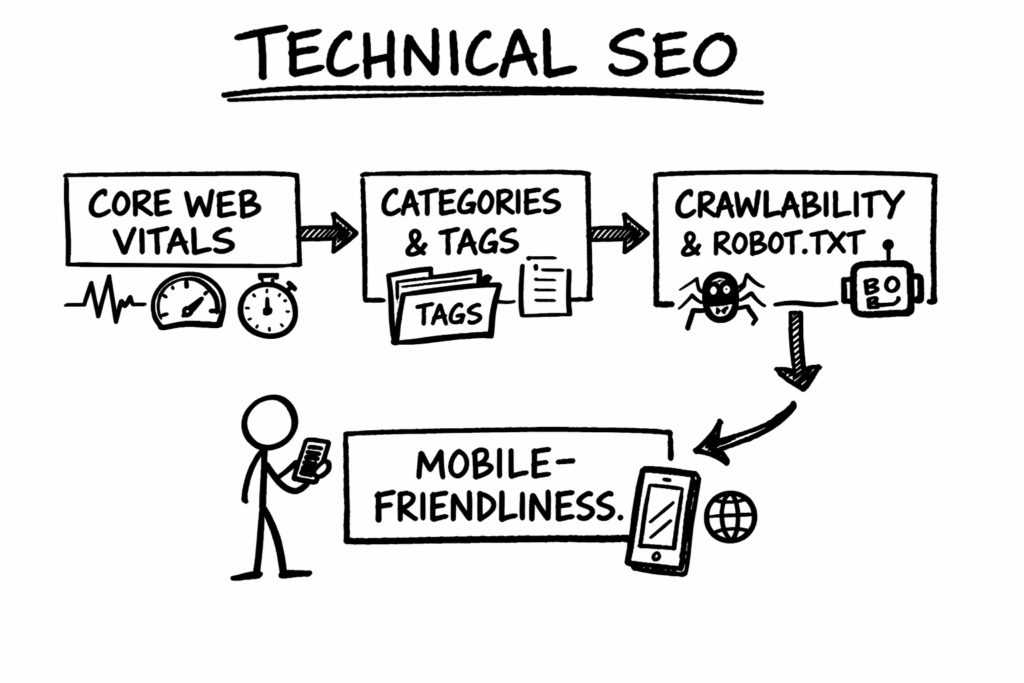
Technical SEO doesn’t feel exciting, but it protects revenue more than most blog posts ever will. If search engines struggle to crawl your site efficiently, your high-intent pages may not rank consistently.
That directly affects demo flow.
Clean site structure and deliberate internal linking ensure authority flows toward pricing, comparison, and use case pages instead of getting trapped in outdated blog content.
You also need to fix pages that quietly block conversions. Slow load speed. Broken forms. Redirect chains. These issues don’t just hurt rankings. They reduce trials.
And then there’s volatility. Major site migrations, careless URL changes, or indexing mistakes can trigger traffic drops.
When organic drives pipeline, those drops hit MRR fast. Technical discipline protects ARR.
#4. Measure SEO and Revenue Metrics
If your SEO dashboard only shows traffic, you’re measuring motion, not impact. Sessions feel good. Rankings feel even better. But neither pays salaries.
Track trial signups and demo requests first. Then move deeper into SQLs and actual pipeline generated. That’s where SEO proves its value.
You might notice something that deserves your attention. A blog post with 5,000 visits produces fewer demos than a comparison page with 400 visits. That insight changes strategy fast.
Revenue metrics expose which keywords attract buyers and which attract curiosity. Once you see that pattern, content decisions become sharper and far more aligned with MRR growth.
Also, multi-touch tracking matters because buyers research across weeks, sometimes months. SEO might introduce them, while a retargeting ad or sales call closes them. Without proper attribution, SEO gets undervalued.
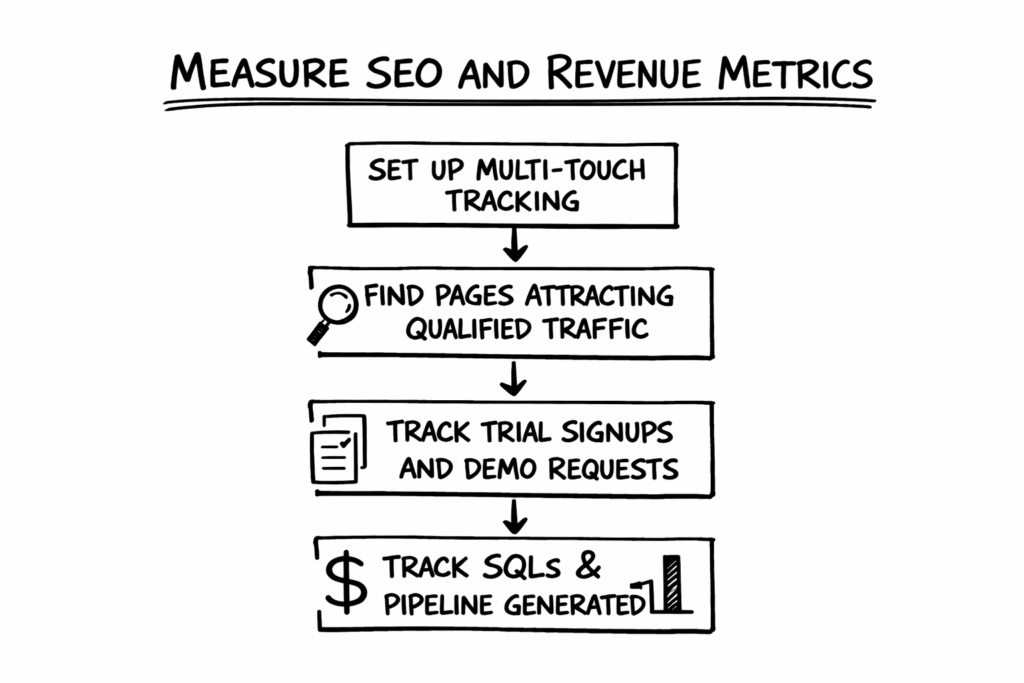
Integrate GA4 with your CRM so you can follow the journey from first organic click to revenue.
Use SEO to Increase ARR and MRR for SaaS
When done well, SEO becomes far more than a traffic channel. It becomes a steady source of qualified demand.
The key lies in aligning search strategy with revenue outcomes, not vanity metrics.
Focus on high-intent keywords, build pages designed to convert, and measure results through pipeline and customers.
Companies that consistently use SEO to increase ARR and MRR treat organic search as part of their growth engine, not just their content calendar.