-
 Piaff Dibota
- Blog
- Updated on January 1, 2026
7 Red Flags When Hiring a SaaS Marketing Agency in 2026
40% of clients say they’ll switch from their primary agency within the next six months. This means that almost half of companies are not satisfied with their current agencies.

Let’s prevent this terrible situation for you.
This post breaks down the red flags when hiring a SaaS marketing agency, so you can spot problems early and ask sharper questions.
You’ll also avoid paying for “activity” that never turns into trials, demos, or pipeline.
Keep reading!
Table of Contents
Red Flags vs Green Flags: Comparison
| Area | Red flag | Green flag |
|---|---|---|
| Promises | They guarantee rankings, revenue, or a fixed demo number on a timeline they can’t control. | They commit to clear weekly deliverables, review points, and measurable success goals. |
| Reporting | They report mostly vanity metrics like impressions, sessions, rankings, DA/DR, backlink counts, time on page, and likes. (Some metrics make sense depending on project) | They report outcomes like demo requests, trial starts, activation, trial-to-paid rate, qualified leads, and pipeline influence. |
| Strategy | They talk in vague “we’ll optimize everything” language without a simple 30/60/90 plan. | They give a plain-language roadmap with priorities, sequencing, and what ships first. |
| Keyword focus | They chase high-volume blog keywords that rarely lead to buyers. | They prioritize intent pages like pricing, alternatives, vs, best-for, and use cases. |
| Proof | They show traffic charts without baselines, timelines, or conversion context. | They show starting point, timeframe, work done, and business results tied to tracking. |
| Team | You get sold by seniors, then handed to juniors you never meet. | You meet the delivery team and know exactly who owns each part of the work. |
| Ownership | They keep logins and docs in their systems so you depend on them. | You keep access and they document everything so handoffs stay clean. |
7 Red Flags When Hiring a SaaS Marketing Agency
The red flags when hiring a SaaS marketing agency are:
- They guarantee outcomes they don’t control
- They chase traffic while you need revenue
- They can’t explain a clear plan in plain language
- Their case studies feel like magic stories, not work
- Reporting is a full of vanity metrics
- They don’t understand SaaS growth beyond acquisition
- They require total control and create dependency
Let’s discuss them in more detail.
Red Flag #1. They Guarantee Outcomes They Don’t Control
Guaranteed outcomes is, by far, the first red flag when hiring a SaaS marketing agency. A trustworthy agency should not promise “#1 rankings,” “10x MRR,” or a fixed number of demos by next month.
You can do everything right and still get hit by a competitor’s big launch, a pricing change, or a search update.
Take what happened in SEO in 2024 and 2025.
In March 2024, Google rolled out one of its biggest core and spam updates ever.
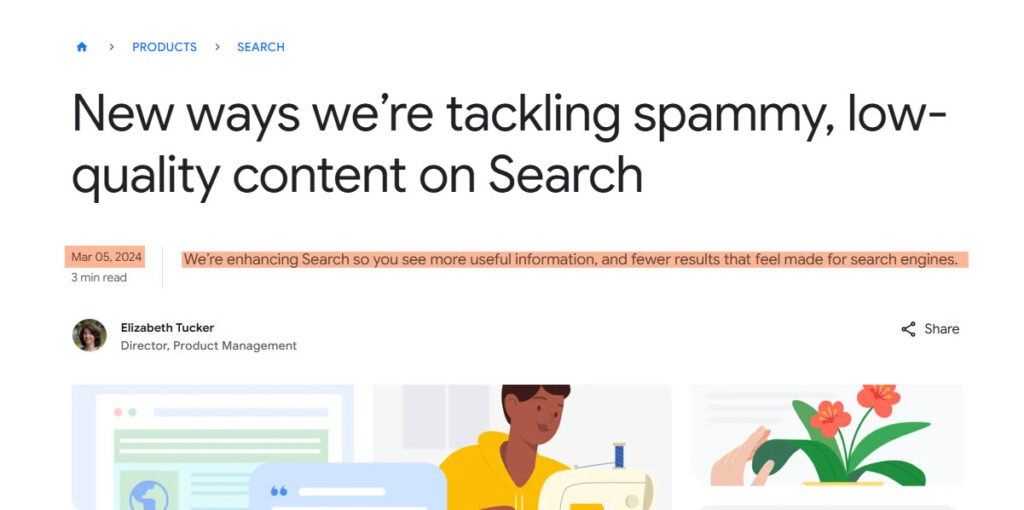
t brought significant changes to how low-quality and unoriginal content was assessed, and Google said this effort reduced unhelpful content in search results by around 45 percent.
Many websites, even the good ones, lost a lot of traffic and still struggling to recover.
Good SaaS marketing agencies talk about things they can control:
- What they will ship,
- How often,
- What gets reviewed, and
- What success metrics you’ll track.
You want confidence, sure, but not uncertain certainty. Ask for the exact weekly deliverables and what happens when results lag.
Let’s review the next red flag when hiring a SaaS marketing agency.
Red Flag #2: They Chase Traffic While You Need Revenue
Some agencies still act like sessions equal success. They’ll pitch blog volume, “top of funnel,” and generic keywords that look nice in a chart. Meanwhile your sales team waits.
A SaaS marketing agency should start from conversion paths: pricing, alternatives, comparisons, use cases, and “best for” pages, plus onboarding and activation content.
If they can’t explain how work turns into trials, demos, or pipeline, you’ll end up paying for content that gets claps but no customers. Ask how they pick keywords and pages.
Red Flag #3. They Can’t Explain a Clear Plan in Plain Language
You should be able to repeat the plan to a teammate without sounding confused. If you hear vague talk like “we’ll optimize everything” or “we have a proprietary method,” that’s a warning.
Real plans include priorities, sequencing, and trade-offs: what comes first, what waits, and why. They should map the first 30 to 60 days with specific actions, owners, and checkpoints.
If they dodge specifics, you’ll feel stuck later when you ask, “What are we doing this week?” and get fluff back.
Let’s see a few more red flags to consider when choosing a SaaS marketing agency.
Red Flag #4. Their Case Studies Feel Like Magic Stories, not Work
Case studies should show inputs and outputs, not just a victory lap.
Be wary of screenshots with no context, cherry-picked wins, or results that depend on brand size you don’t have.
You want to see starting point, time window, what they actually did, and what changed, including mistakes.
Also, watch for “we drove X leads” without saying what counts as a lead. Ask for one example closest to your stage, market, and sales cycle.
Red Flag #5. Reporting is Full of Vanity Metrics
If you cannot measure it, you cannot improve it.
Some SaaS agencies hide behind monthly PDFs, or they report impressions and rankings while ignoring sign-ups, demo requests, activation, and churn.
You should get access to dashboards, source-of-truth tracking, and a simple view of what shipped and what’s next.
I also like when an agency admits tracking gaps early and fixes them fast. If they resist transparency, you’ll spend months arguing about “performance” instead of improving it.
Red Flag #6. They Don’t Understand SaaS Growth Beyond Acquisition
SaaS marketing isn’t only getting clicks. It’s also activation, retention, expansion, and reducing churn.
An agency that’s not running generic playbook will ask about your
- Onboarding flow,
- Sales cycle,
- Trial-to-paid rate, or
- Product stickiness.
Not asking for this can work for a while, but it’ll fall apart eventually.
You want people who talk about lifecycle emails, in-app education, sales enablement pages, and how messaging shifts by persona. Ask what they’d do differently for PLG vs sales-led SaaS.
Red Flag #7. They Require Total Control and Create Dependency
Watch for agencies that insist on owning every system, every login, every relationship, and every doc.
That setup makes you dependent, and it gets scary when you want to switch vendors or bring work in-house.
You should keep access to analytics, ad accounts, CMS, and key assets.
Also, pay attention to communication: if you only hear from them when you ask, that’s stress waiting to happen.
Questions to Ask on the First Call With a SaaS Marketing Agency
Now, you know the red flags when hiring a SaaS marketing agency. But what questions should you ask them to detect the red flags on the first call?
Here are seven good ones to ask:
What’s the main goal for the next 90 days: demos, trials, pipeline, activation?
Which buyer segments do you focus on, and how do you confirm ICP fit?
What pages do you prioritize first: pricing, alternatives, comparisons, use cases? Why?
What do you ship each week (assets, fixes, experiments), and who does what?
How do you measure impact beyond traffic (attribution, CRM, product analytics)?
What does reporting look like, and how often do we talk?
If results stall, what changes first?
Spot Red Flags When Choosing a SaaS Marketing Agency
Hiring help should feel clear, not confusing. Use the checklist and the red-flag vs. green-flag table to pressure-test fit fast, then insist on simple reporting and a real 30- to 90-day plan.
If an agency dodges specifics, hides the work, or sells certainty, walk away.
Catching these red flags when hiring a SaaS marketing agency saves you months of cleanup later.