-
 Piaff Dibota
- Blog
- Updated on July 6, 2026
How we grow qualified traffic, leads, and revenue for B2B SaaS companies
Most B2B sites don’t have a traffic problem. They have a fit problem.
You rank for plenty of queries, but the people landing on your pages never become demos, trials, or real deals.
In this post, we show how Rank Lyx builds search around buyer intent, cleans up the technical friction, and ships BOFU pages that sales teams actually share.
Qualified traffic first. Then leads. Then revenue.
How B2B buyers actually buy now (and why that changes your SEO plan)
Most B2B teams still act like searchers are “top of funnel” by default. They aren’t. A big chunk of buyers do the work first, then show up with a shortlist.
A few numbers that prove that:
- B2B buyers often reach sellers when they’re already deep into the decision. One Demand Gen Report write-up puts it at nearly 70% through the buying process.
- 6sense summarizes similar research: buyers spend about 70% of the journey researching before talking to vendors.
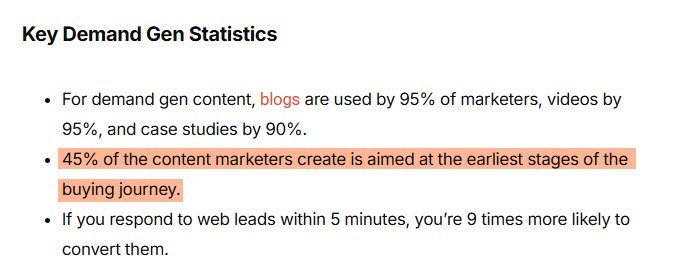
- 45% of the content marketers create is aimed at the earliest stages of the buying journey.
What “qualified traffic” means to us (and what it doesn’t)
Here is our definition of qualified traffic at Rank Lyx. It isn’t “people who searched a keyword.” It’s people who:
match your ICP enough to actually buy
show decision signals (comparisons, alternatives, implementation, integrations, security, pricing, ROI)
land on a page that helps them decide, not just learn
The uncomfortable part: you can rank #1 and still attract the wrong crowd.
We’ve seen pages pull thousands of visits while bringing in prospects who could never afford the product, or who needed a totally different solution.
That’s a positioning issue showing up as an SEO issue.
Learn more about us in this Rank Lyx FAQ.
The Rank Lyx system for turning search into leads and revenue
1) We start from the money pages
We build an “opportunity map” around BOFU and MOFU intent first:
comparisons (X vs Y)
alternatives (X alternatives, best alternatives to X)
“best for” (best CRM for B2B SaaS, best tool for X team)
use cases (for sales teams, RevOps, CS, IT, finance, etc.)
integrations (X + Y integration)
pricing and cost framing (pricing, cost, calculator, ROI)
implementation and migration (how to switch, rollout, security review)
If you sell B2B software, these keywords are basically your buyers narrating their decision in public.
A small twist we like: we look for “objection keywords.” Stuff like “problems with X,” “X limitations,” “X onboarding time,” “X compliance,” “X reporting.” Those pages can feel scary to publish, but buyers search them anyway. If you don’t answer it, Reddit and G2 will.
2) We fix the boring technical stuff that kills demand capture
This part isn’t glamorous, and it’s why teams delay it. But it matters because buyers do not “wait for your site to load.”
Typical work here looks like:
indexation and crawl control (what should rank, what should disappear)
site architecture that matches buyer intent (not internal politics)
internal linking that moves authority to decision pages
structured data where it helps (FAQ, product, review where appropriate)
speed and UX basics that reduce drop-offs
3) We build content that helps a buying committee say “yes” internally
A lot of content fails because it talks to one person. Real B2B deals don’t work that way. So we create pages that make it easier for someone to champion you in a Slack thread or a meeting:
clear recommendation logic (who this is for, who it’s not for)
proof points that don’t feel like fluff (specific outcomes, constraints, tradeoffs)
implementation details (timeline, requirements, migration steps)
security and procurement-friendly answers (without drowning the page in legal copy)
lightweight summaries at the top, deeper detail below (people skim, then they commit)
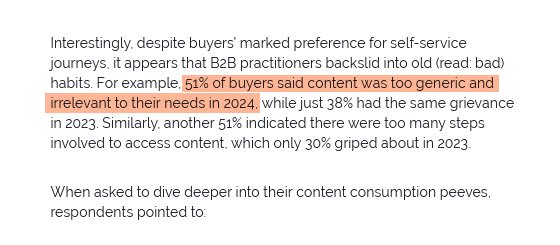
Demand Gen Report’s 2024 Content Preferences survey found 51% of buyers said the content they got was too generic and irrelevant.
So we push hard against generic “ultimate guide” writing, even when it feels safer.
4) We design pages to win in classic search and in LLM answers
You already know this, but it’s easy to ignore when deadlines hit: buyers don’t only search in Google anymore. They ask ChatGPT, Gemini, Perplexity, whatever they opened that day.
How Rank Lyx helps B2B SaaS companies:
direct definitions and summaries (so an answer engine can quote you cleanly)
clear comparisons with criteria (not vibes)
tables that map “feature → outcome → who cares”
cited claims where possible (buyers trust sources, LLMs also like sources)
pages that mention adjacent solutions and alternatives honestly (yes, really)
This is where a lot of marketers get weirdly defensive. We’d rather be the page that says, “If you need X, choose Y.” That sentence can earn trust, and trust is a ranking signal in the real world even when it’s not a formal Google metric.
5) We build authority on purpose (instead of hoping content magically spreads)
You can publish the best comparison page on earth, and it can still sit on page two because your site lacks authority in that topic.
So we treat authority as a project:
link building tied to specific pages that must win (not random blog posts)
linkable assets that have a reason to exist (benchmarks, templates, original data, tools)
digital PR angles when you actually have something newsworthy (most teams don’t, and that’s fine)
internal linking that behaves like a distribution network inside your site
We create “supporting pages” that journalists and bloggers naturally cite (definitions, stats, benchmarks), then route that authority internally to BOFU pages through intentional linking.
6) We track pipeline influence, not “rankings as the final score”
Rankings matter, sure. But you can’t deposit a ranking.
So we set up tracking that connects search to outcomes:
lead tracking that distinguishes “good fit” vs “noise”
conversion paths (what pages show up before demo, trial, contact)
assisted conversions and time-lag reality (B2B isn’t one session)
reporting that highlights decisions, not vanity metrics
And we look at signals people forget:
on-site search terms (your visitors literally tell you what they can’t find)
sales call transcripts (objections become content briefs)
lost deals notes (your “missing page” list lives here)
What B2B SaaS teams often ask us
“We need more top-of-funnel”
Maybe. But sometimes you need fewer TOFU posts and one killer “X vs Y” page that your sales team sends every week.
“Our product is too niche for SEO”
Niche products often win faster because the intent is clearer and the keyword sets are smaller. The risk is low volume, not low value. If one deal is worth $30k ARR, you don’t need 100k visits.
“We already publish content”
Publishing doesn’t equal capturing demand. If the content doesn’t line up with how buyers compare, budget, and get approval, it won’t convert.
Who does Rank Lyx work with
We’ll work with you if:
you sell a considered B2B product (not impulse buys)
you have a real sales motion (even if it’s product-led, someone still approves)
you care about demos, trials, pipeline, revenue, not traffic screenshots
It’s a rough fit if your only goal is “more blog posts,” or if you want SEO to work with zero involvement from product, sales, or customer insight. We can write, but we can’t guess your buyers better than your buyers can.